
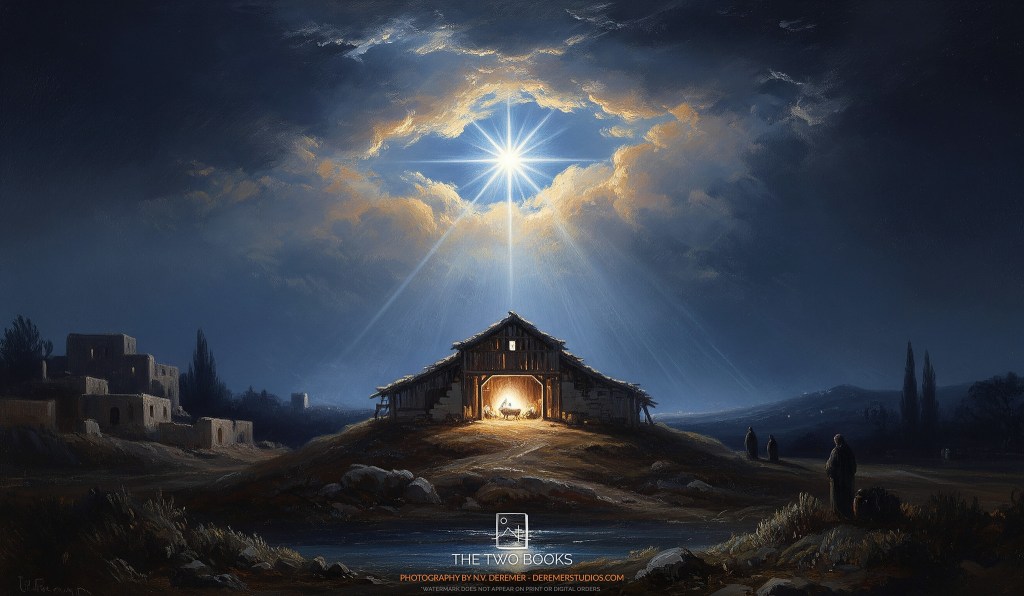
An Advent Meditation on the themes of humility and sacrificial love as seen through the lens of Rend Collective’s new song, A Christmas Hymn.
No doubt, music is a powerful medium. And if you’re anything like me, every once in a while, a new piece of music just resonates with the chords of your soul. This year, Rend Collective ‘s new song, A Christmas Hymn, did exactly that for me. One line in particular caught ahold of me, describing Christ as the “herald of the prideless kingdom”. What a powerful line! Their new song, set to the 1758 hymn by Robert Robinson, Come Thou Fount, and including part of the beloved hymn, takes a magnifying glass to the humility of Christ’s first advent and the kingdom of the humble that His incarnation inaugurated.
The new hymn is rich and deep, and offers a focus so needed in our day of brash, self-exaltation. To consider then, the King of Glory, Creator of the Universe, who chose to dwell in the darkness and dirt of His creation as a powerless baby born to a poor peasant family in a borrowed barn, is a wonderful breath of fresh Gospel air this Christmas season. In the bustle and busyness of this Advent, I welcome you to come with me and intentionally slow down and consider our lowly Savior who came to inaugurate a prideless kingdom without end!
He Descended to our Dust
Come now see the Lord of Heaven in a lowly manger laid
King deserving of a throne room, born a poor, powerless babe
Oh the mystery oh the wonder
Somehow God is one of us
Such is greatness in His kingdom
He descended to our dust
The first stanza of Rend Collective’s hymn begins by contrasting the glory of who Christ is with the way in which He chose to come to earth. Jesus, ruler of Heaven and Earth, the one who created all things (John 1:3) and sustains all things (Hebrews 1:3, Colossians 1;17) Himself descended to our dust to become part of His creation. Though Jesus deserves a throne room, He chose to enter into His creation by being born, not in a palace, but in a lowly manger.
Herald of a Prideless Kingdom
Christ the Word, holy expression of the humbleness of God
Herald of a prideless kingdom, one of sacrificial love
Mighty One who made the heavens
Knelt to wash his brother’s feet
And the earth that He created
He bestowed unto the meek
Admittedly, the first line of the second stanza has caused me a bit of theological dissonance. There is a sense in which it is very true to claim Jesus embodied the humbleness of God. Jesus did humble Himself by being obedient to the point of death (Philippians 2:8). But for Jesus, this humility, at least broadly speaking, was transient. As we read on in Philippians 2, we see that this act of supreme humility is the forbearer of Christ’s exaltation – to the point that one day, whether in joy or by force, all of creation will bow at His holy feet.
Perhaps part of the rub for me is that, as Scripture plainly puts forward, God is God-centered. At the surface this seems to be the opposite of humility, right? At its core, pride is thinking of one’s self higher than we ought to think. We overestimate our station. There’s a differential between our reality and the claim we boastfully make. Not only is that not true for God, it cannot be true of God. He stands above His creation as the greatest, most beautiful, perfect, and worthy being in all of the universe. There is no one higher, nothing greater. Full stop. Seeking His own glory in our worship is not prideful megalomania, but a loving intent to see us find our greatest joy and satisfaction in Him. There is nothing else in all of creation that can bring us true, lasting, eternal joy.
And so, the King of Glory came down to us, stooping even to wash the feet of his disciples – one of whom would soon betray Him. What a picture of loving glory and humility! And indeed, as the last line of this stanza reminds us, it is to those who have seen their own bankruptcy before such a God – those who have given up all hope of pridefully earning God’s favor and instead turned to Him in desperate dependence – it is these meek to whom He will grant the reward.
Suffering Servant now Exalted
King of glory became nothing
Humbled to the point of death
Stretched His arms out like a beggar
And forgave with His last breath
What God started with a manger ended with an empty grave
Suffering servant now exalted, Jesus name above all names
Like so many Christmas songs that I cherish, this song which exults in Christ’s humility turns from the manger to the cross. Pause to consider that Christ’s coming was not merely taking on our form, being born into poverty, not having a place to lay His head – as amazing as all those realities are for the One who holds creation in His hands. Nevertheless, the trajectory of the incarnation was always arcing toward the crucifixion – and beyond that, to the glorious confirmation of the resurrection.
As we enjoy the warm joys of the Christmas season, might the dreadful shadow of the cross never be fully eclipsed by our celebrations. It is for this reason that Jesus came. As glorious as His incarnation is, it is overshadowed by the purpose of the cross – a grim reminder that the Savior we celebrate on Christmas is a redeemer we desperately need.
Heaven Breaks Forth like the Springtime
Light eternal in the darkness
He shall not be overcome
Shining over all our shadows
Every curse has been undone
Heaven breaks forth like the springtime
Through the winter of our souls
Now His life is life abundant is forever ours to know
And so, from the manger to the cross, and now to the fruit of Christ’s work in His church, we turn. By His wounds we are healed (Isaiah 53:5) and through His propitiation we have life (1 John 4:10). The curse is conquered and the power of the grave is undone. Even through the shadowy valleys of this life, Christ’s resurrection has purchased for us an unconquerable good. Every ounce of our suffering, every bit of misery in this life is purposed by God for our greatest good (Romans 8:28f, 2 Corinthians 4:16-18). For the saint, glory unimaginable is waiting for us on the other side of death – and in that we can rest!
Come Now Church, Let us Adore Him!
Come now church let us adore him
Tune your heart to sing His grace
Streams of mercy never ceasing
Call for songs of loudest praise
Teach me some melodious sonnet, sung by flaming tongues above
Praise the mount I’m fixed upon it Mount of God’s redeeming love
And finally, as the hymn comes to a close, we find a wonderfully doxological adaptation of the opening stanza of Come Thou Fount that calls us to praise the One who has so humbled Himself for us! This Jesus – humbled by His incarnation, His life, and His death – this Jesus is worthy of our unceasing praise!
This Jesus has called us to a life of lavish humility fed by the glorious realities of His Gospel! Oh friends, we have been forgiven so, so, so much! Indeed, the Kingdom Jesus inaugurated, both by example and command, was a prideless kingdom that does not look out at others in comparison and self-exultation to, but which recognizes that we are all beggars still, every bit as much in need of the Savior’s saving and sustaining grace as the most vile and wicked criminal we can imagine. Such a Gospel kills our pride and replaces it with thankful, dependent humility. Such a Gospel allows us to lay aside our rights and comforts for the sake of even our enemies, knowing that we are following in Jesus footsteps, the one who laid down His life for His enemies, that we might become joint heirs with Him.
“1 When Jesus saw the crowds, He went up on the mountain; and after He sat down, His disciples came to Him. 2 He opened His mouth and began to teach them, saying,
Matthew 5:1-12, NASB1995
3 “Blessed are the poor in spirit, for theirs is the kingdom of heaven.
4 “Blessed are those who mourn, for they shall be comforted.
5 “Blessed are the gentle, for they shall inherit the earth.
6 “Blessed are those who hunger and thirst for righteousness, for they shall be satisfied.
7 “Blessed are the merciful, for they shall receive mercy.
8 “Blessed are the pure in heart, for they shall see God.
9 “Blessed are the peacemakers, for they shall be called sons of God.
10 “Blessed are those who have been persecuted for the sake of righteousness, for theirs is the kingdom of heaven.
11 “Blessed are you when people insult you and persecute you, and falsely say all kinds of evil against you because of Me. 12 Rejoice and be glad, for your reward in heaven is great; for in the same way they persecuted the prophets who were before you.”
May the Lord richly bless you this Christmas season as you look to the One who humbled Himself to the point of death that we might receive and proclaim the Prideless Kingdom of our great God and King! To God be the Glory, in His church, both now and forever more!
 The Two Books
Leave a comment